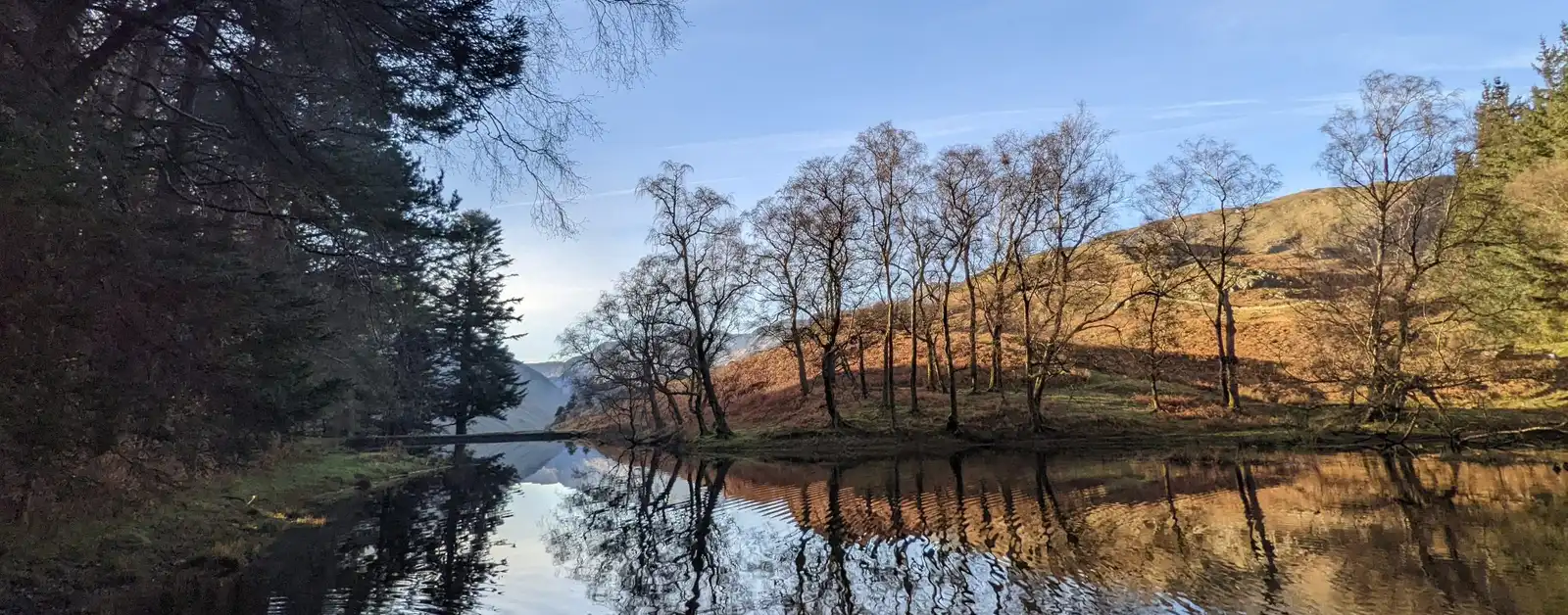
Lanty’s Tarn
One of the most beautiful corners of our historic estate, we’re the proud custodians to this amazing site, with ongoing projects to protect the Tarn.
Lantys Tarn was originally a natural occurring pond named after Cumbrian farmer Lancelot Dobson. The tarn was enlarged in the 1820s by John Marshall of Patterdale Hall. It served as a vital water supply, a fishing site, and a source of winter ice, with an adjacent ice house facilitating for food storage at Patterdale Hall.
2026 Restoration
The Victorian-era dam (built c. 1860), was orginally constructed of layers of dry stone wall, evenentually faced in concrete. In recent years it has suffered from severe cracking and leaking, often leaving the tarn almost dry in summer. Previous surface repairs have proved insufficient to maintain a steady water table in the Tarn.
The reconstruction project, made possible by the Farming in Protected Landscapes (FiPL), involves a building a new dam face, using stone-effect, prefabricated interlocking concrete blocks to stop leaks, prevent erosion and ensure a stable water body. Dam Wall Repairs will help prevent bank erosion and protect the historic Ice House located in the fell side below the Tarn.
Ecology
Fluctuating water levels caused by leaks have previously limited habitat stability. The restoration project aims to maintain consistent water depths to support the tarn’s fringe habitat and improve the water quality of the tarn. The tarn environment creates a unique habitat for wildlife, including freshwater mussels, frogs, and tadpoles, as well as swamp vegetation such as Water Forget-me-not, Lesser Spearwort, Water Purslane, Marsh Pennywort, Common Spike-rush, and Bottle Sedge.
To further enhance the tarn’s ecological health, we are planting 60 native wetland trees—including Aspen, Downy Birch, and Alder—which will improve water quality, provide shade, and boost local biodiversity. The tarn will also provide a reliable water source for grazing livestock on the fellside.
Wider Impact
The project’s benefits extend beyond the tarn, positively influencing the neighbouring fellside—a designated Site of Special Scientific Interest (SSSI).
This initiative also complements broader environmental efforts in the area, specifically the recent restoration of a neighbouring larch plantation into a natural broadleaf woodland.
Stabilising the site safeguards the historic ice house and ensures a reliable water source for local grazing livestock. At Patterdale Estate, we strive to demonstrate a commitment to active land husbandry and the area’s long-term environmental health.